



Make Procurement's Footprint Bigger with AI

Start with the repetitive work
I bet that every procurement leader in the world right now is under pressure to do something with AI. Your CEO, CTO, or even CFO is asking what your plans are, and there's a real temptation to move quickly just so you can say you’re doing something.
At Zendesk, we are being diligent about the problems we are really trying to solve. While excitement around AI is real, excitement alone is not a strategy.
Luckily, we already had a head start. Our procurement team had already invested in tools that had built-in AI. This helped ensure that our first step wasn’t how to get AI into procurement, but more so where we could point it. The question we were answering was, “Where can AI actually help us?”
Since we are a full scale procurement shop, I started with the obvious places: high volume, manual, repetitive work, where I knew we would find the first dollar of value with AI. We started with invoice matching, then invoice processing. Those tasks are repetitive, follow the same pattern, and could be easily automated with our existing tools.
This kind of focus also helps us build confidence within the team. Visible early wins make people feel good about what AI is doing in their function, which makes them far more likely to trust it and help you scale it. When we started using AI, it was mostly just to automate highly repetitive tasks. Now that trust has been established, we are utilizing AI to build dynamic analyses and add AI assistants into our strategic sourcing team.
AI does the prep, people decide
At Zendesk, we don’t plan to have a team of robots doing strategic sourcing. Our goal is not to have two robots negotiating with each other while people sit on the sidelines.
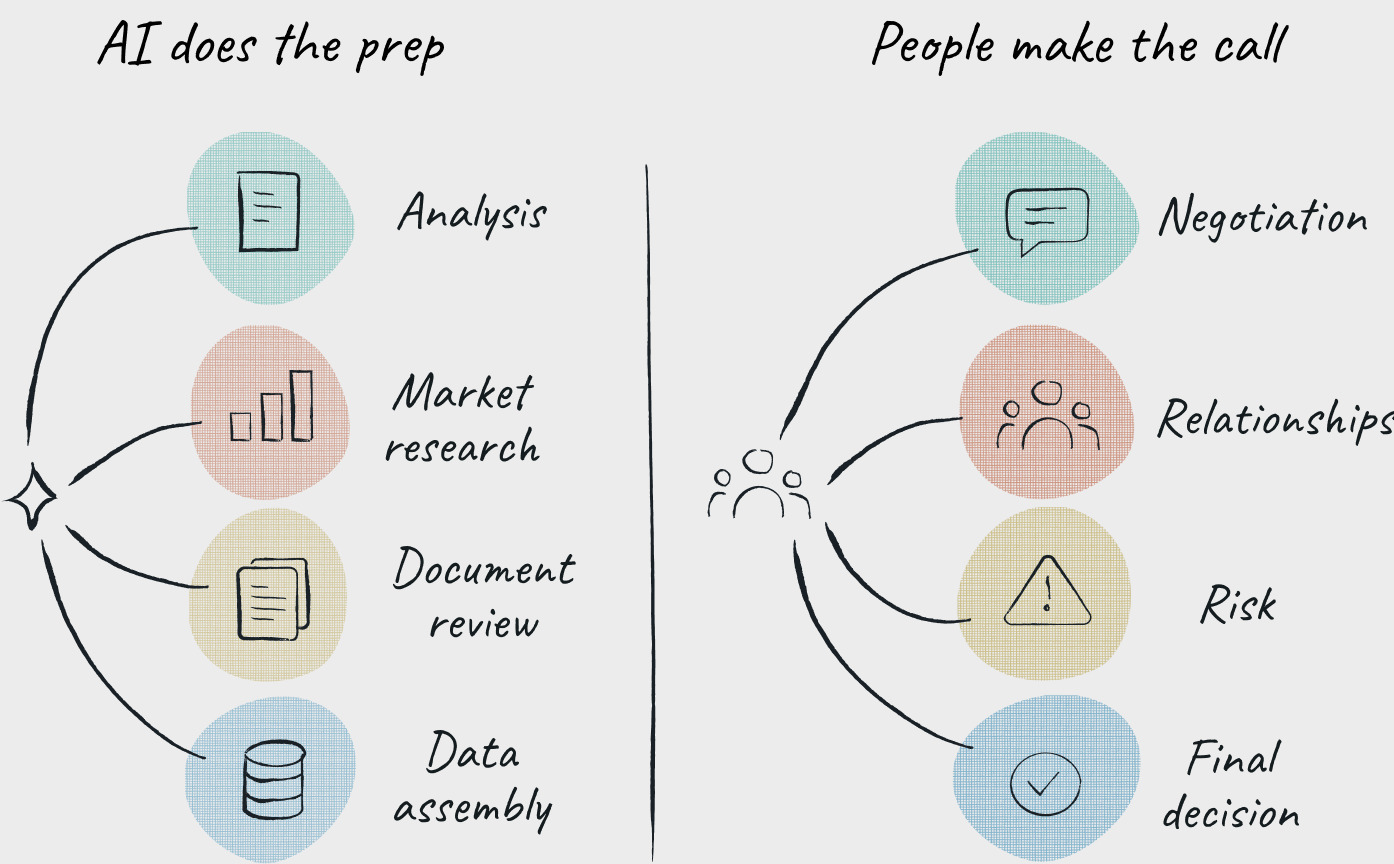
Procurement, for us, sits close to Finance, so the bar for what we let AI decide is high. AI does not make final decisions, and we don’t run end to end negotiations with an agent. When there is an important decision or a call to be made, a person is in the seat.
Where AI is already useful is in the prep and analysis. It can read the market, assemble the picture, and surface the details that used to take a team member hours to pull together. That gives more time for my team to do the part that takes judgment: negotiating, building relationships, and weighing risk.
Transparency is what moves that line. The clearer and more auditable the output is, the more I am willing to hand over. When the system shows its work, we can check it, and then we can trust it with more.
This is where we are today, not where we will be forever. As the technology gets better, I expect we will give it more. But for now, our mission is to use AI to uplevel the people doing the work, not to replace the person and their expertise.
Define what good looks like
Part of my role is leading AI innovation and strategy for Finance globally, and I am currently building out a dedicated innovation team that reports into me. The first question I put to that team is a simple one: what does good actually look like?
Number of hours saved is where everyone starts, and while it is a good metric, it is also an incomplete one. If AI saves someone four hours, we know the task gets done faster, but not whether the business is better off.
The questions I care about come a little later: is adoption still there in six months, or have people gone back to the old ways? Did this help someone make a better decision somewhere, or did it just clear a queue faster? Those questions are harder to measure, and they are the ones that tell us whether AI is worth what we put into it.
Our metrics will continue to evolve in order to show innovation impact. Currently, our success measures focus on three things:
- Productivity: hours saved and the productivity increase that comes with them
- Cost: the difference between building something ourselves vs buying
- Control: whether we are moving faster and making better decisions.
We are still building this out, but I don’t think that is a reason to wait. Waiting for a perfect way to measure everything is a reason not to start.
